A gathering space that connects every room, blending warmth, flow, and timeless comfort.
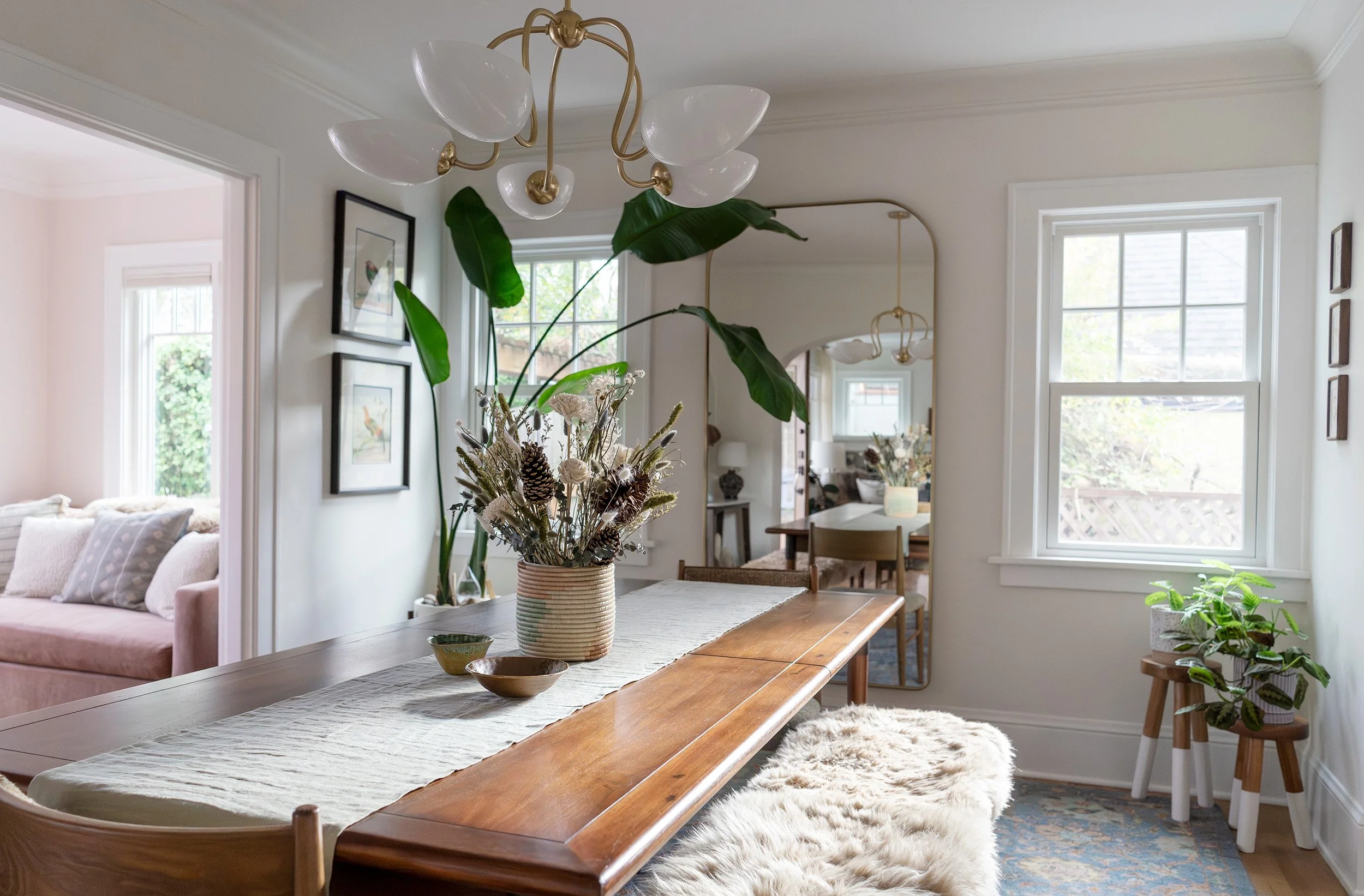
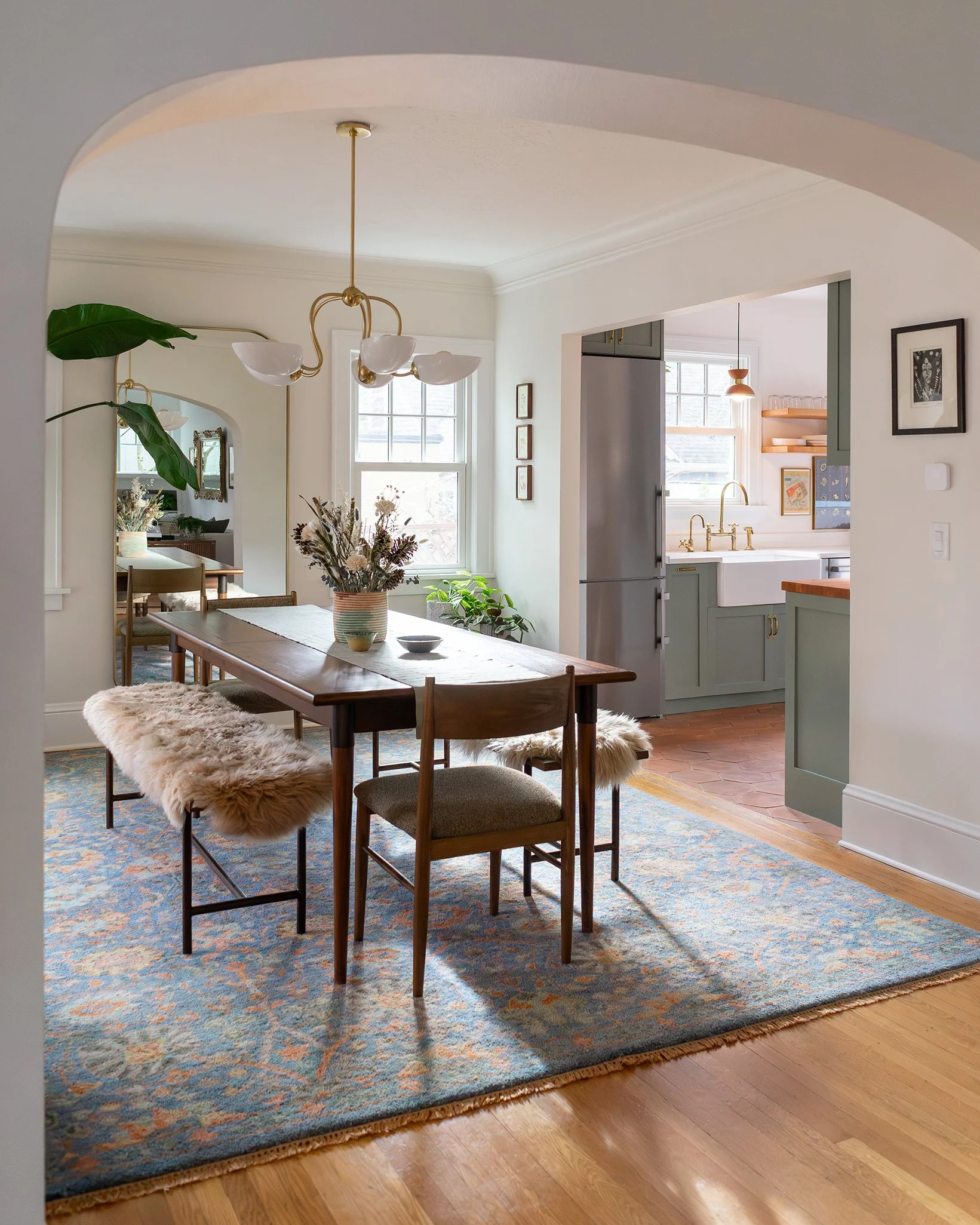
In this home, the dining room naturally became the place everything and everyone passes through. Like many houses of this era, it likely once had doors separating each room, but today the kitchen, TV lounge, entry, and living room all open into this space. Because of that, it was important that the dining room could handle constant movement while still feeling grounded enough to host long dinners and full tables.
A large area rug sets the foundation and quietly ties the surrounding rooms together. Its mix of rust, French blue, ochre, and green pulls from the living room fireplace, the kitchen cabinetry, and the nearby terracotta tile, visually connecting the dining room to the rest of the home. A large mirror at the end of the table reflects both light and architecture, repeating the arch of the entryway, while the chandelier echoes that same curve through its brass arms and shell-shaped glass.
For seating, benches were chosen to keep sightlines open and allow for flexibility, paired with chairs at each end for balance. To soften the benches, they’re topped with caramel lambskin—adding comfort and texture. The acacia wood of both the table and benches adds warmth without feeling heavy, complementing the mix of finishes throughout the house, which range from walnut to oak.
The walls are painted Benjamin Moore Swiss Coffee and carried up to the crown molding to subtly lift the ceiling height, while the remaining trim stays crisp and simple. The result is a dining room that feels warm, welcoming, and deeply connected to the rhythm of everyday life.
Location: Alameda Neighborhood, Portland, OR
Year: 2025