Porch Season is Here: How to Style an Outdoor Space That Actually Feels Finished
A Portland designer's tips for spring porch styling in the Pacific Northwest
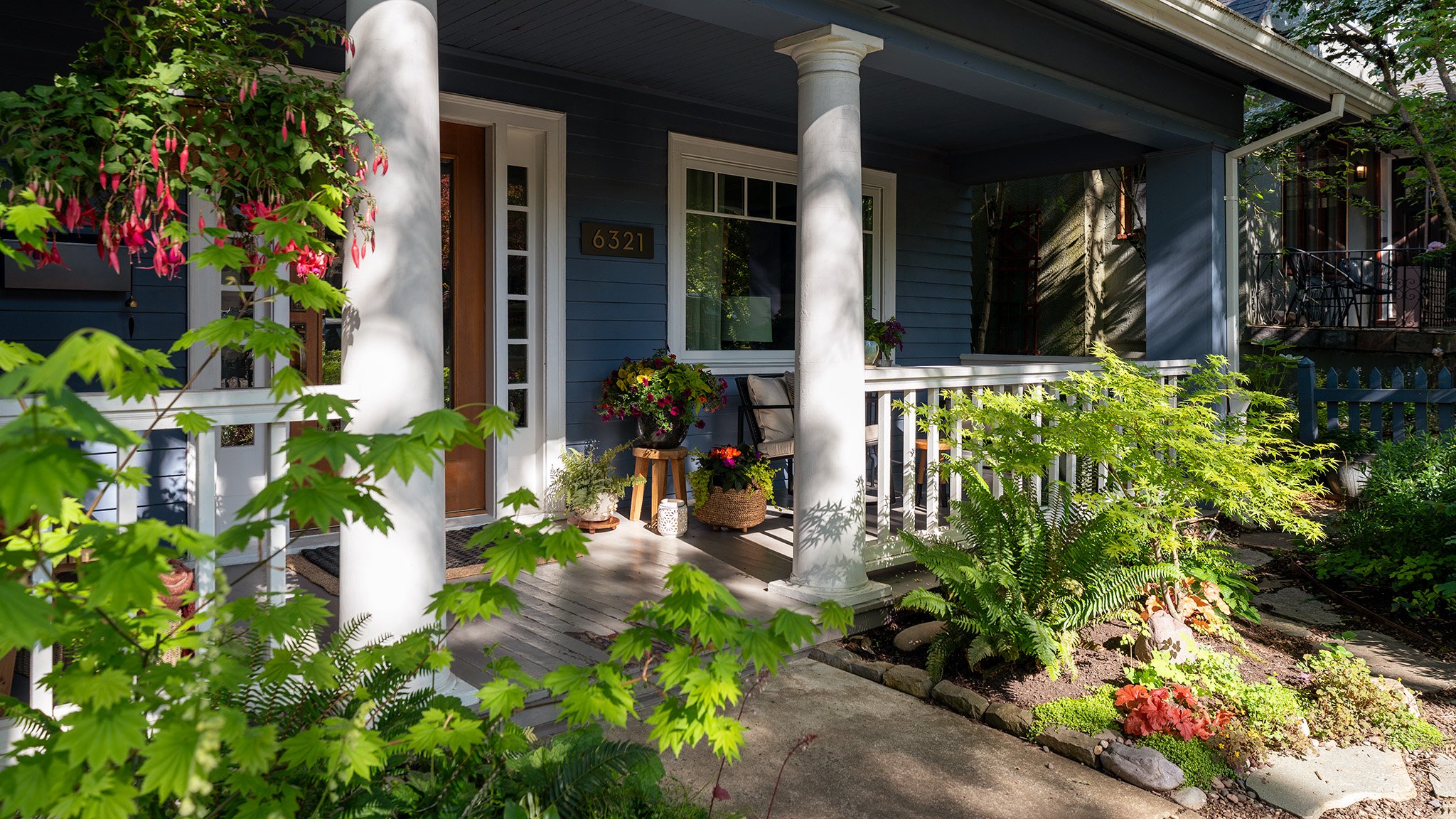
In the Pacific Northwest, porch season doesn't last forever. When it finally arrives, you want to be ready for it. After years of styling my own 1923 Portland front porch and helping clients do the same, I've learned that the difference between a porch that feels finished and one that feels like an afterthought usually comes down to a few specific decisions. Here's what actually moves the needle.
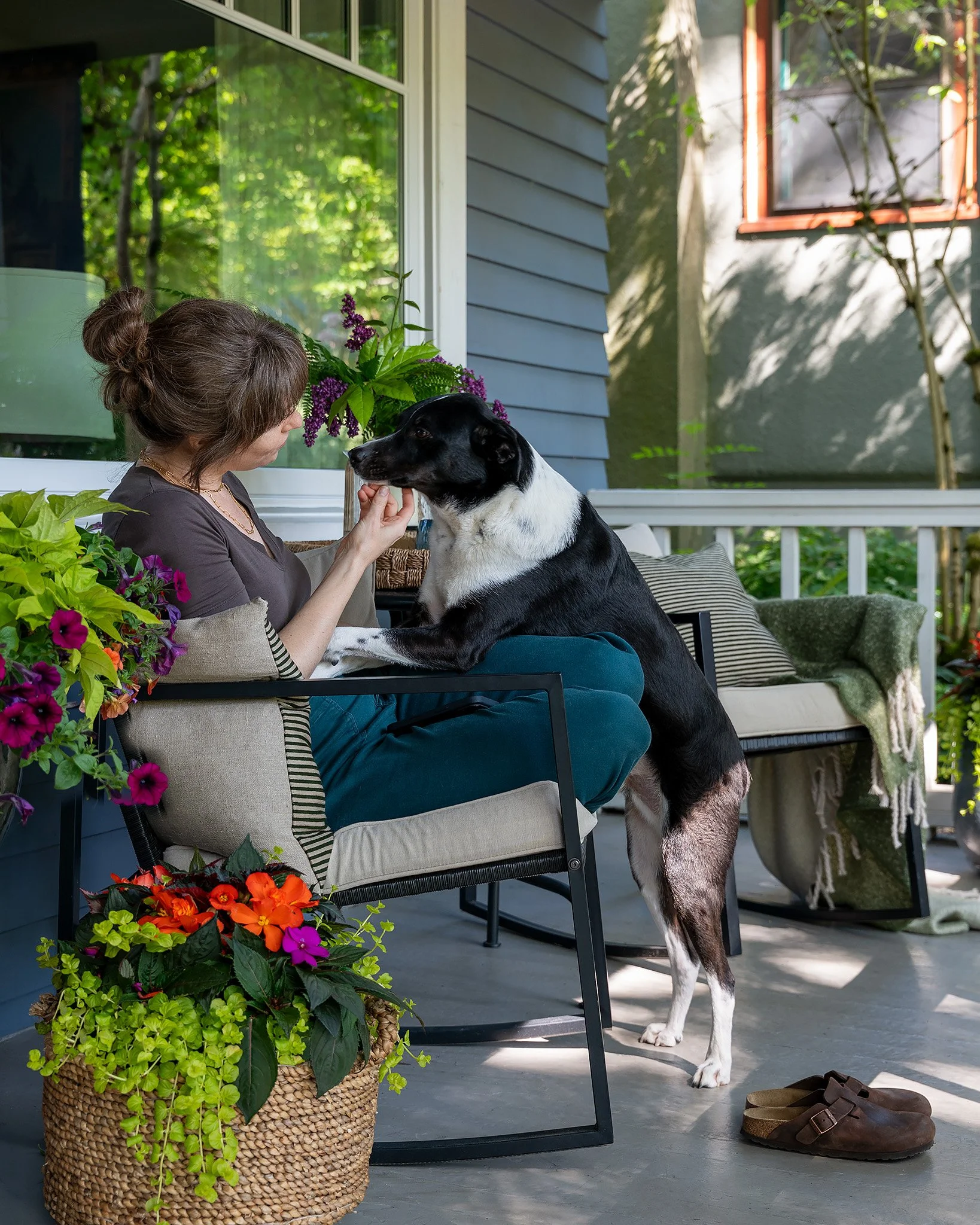
Start with Furniture That Works Hard
You don't have to spend a lot on outdoor furniture to make a porch feel well designed and inviting. My black bistro table is from IKEA and my rocking chairs are from Wayfair. Neither broke the bank and they still look new after three years of living outside. Where it's worth investing a little more is in the cushions. The stock cushions that came with my chairs were too thin, so I swapped them for weather-resistant cushions with more padding. That upgrade made the biggest difference in both comfort and appearance. I store them inside during the off season to extend their life.
Most people buy patio furniture as a set and leave it as is. But outdoor furniture tends to be minimal by design, partly because weather-resistant materials don't come in the same range of colors, patterns, and textures that indoor fabrics do. If you have a covered porch, you have more flexibility than you think. Keep your furniture neutral and let your plants carry the color, then layer in pattern and texture through throw pillows and textiles. That way the florals stay the star of the show, and you can swap them out each season without rethinking your whole setup.
Buy Pre-Assembled Nursery Arrangements
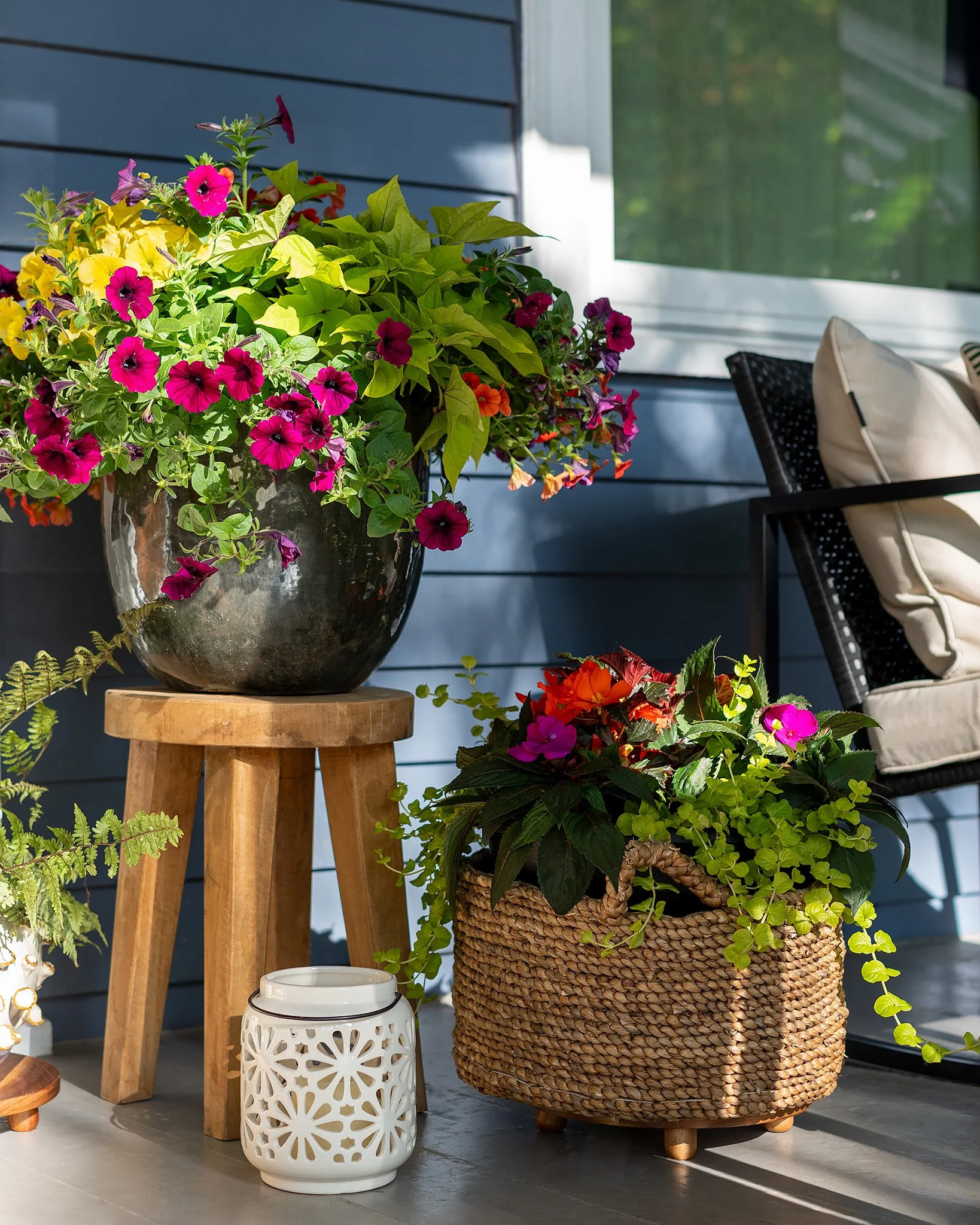
This is my number one tip for spring porch styling: skip the individual plants and buy pre-assembled nursery arrangements instead. When you buy a pre-made mixed planter from a nursery or grocery store, the plants have already matured and grown together into a cohesive composition. If you try to assemble your own from smaller individual plants, it rarely looks as full or intentional. And in many cases you end up spending more money on the individual plants anyway.
Some of my favorites that do well in morning sun and afternoon shade, and that you'll commonly find in pre-assembled arrangements, are begonias, impatiens, geraniums, calibrachoa, ipomoea, and petunias. And don't overlook hanging baskets. A fuchsia or a fern adds a whole other layer to the space and is one of the easiest ways to bring in height variation without any extra effort.
Layer at Different Heights
Styling with accessories is where most people get stuck, but it's also what makes a space feel finished. The key is height variation. Nothing should sit at the same level.
Mix taller planters with lower ones, use small wooden risers to lift arrangements off the ground, and hang baskets overhead. That range of levels is what gives a porch its layered, considered feel.
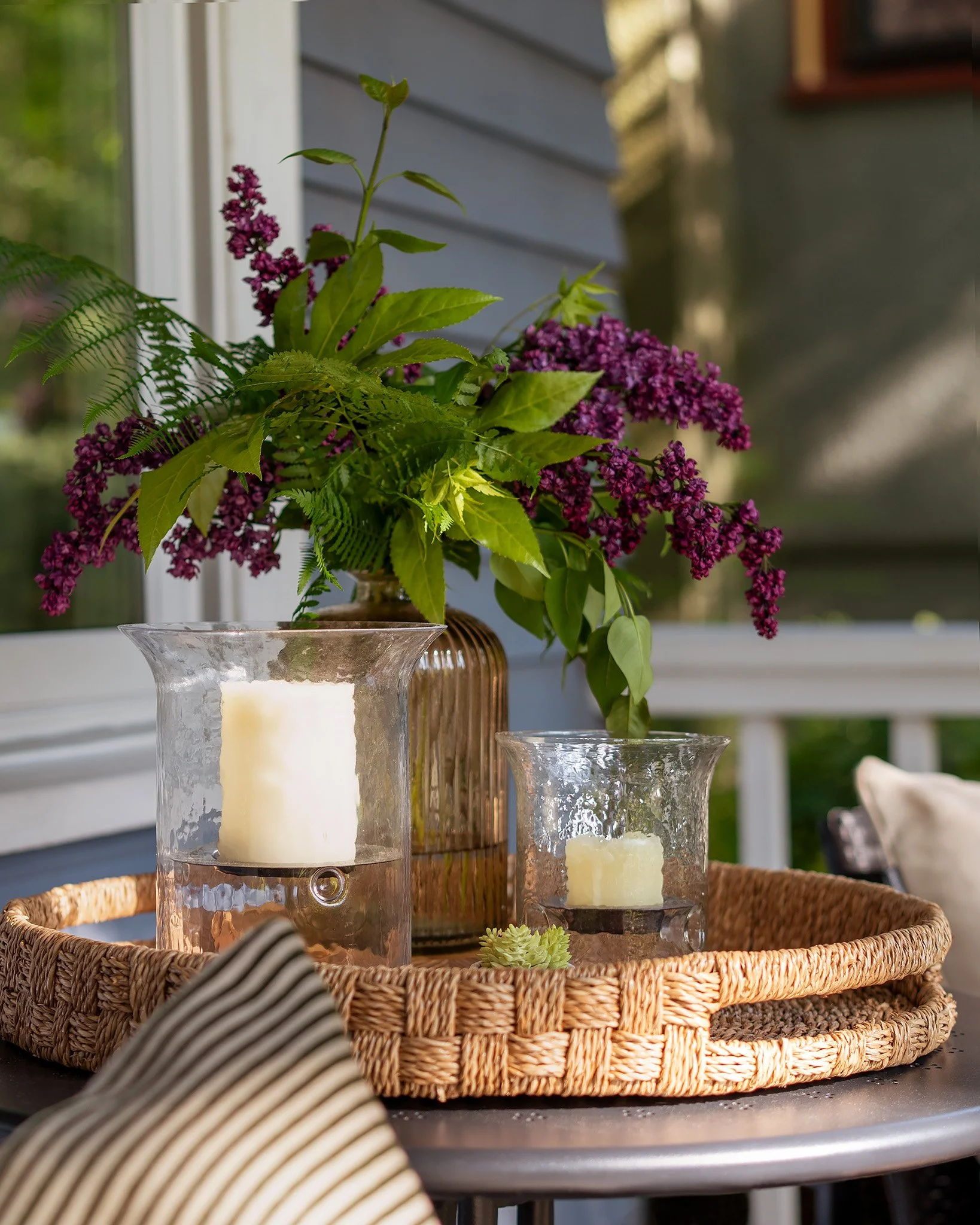
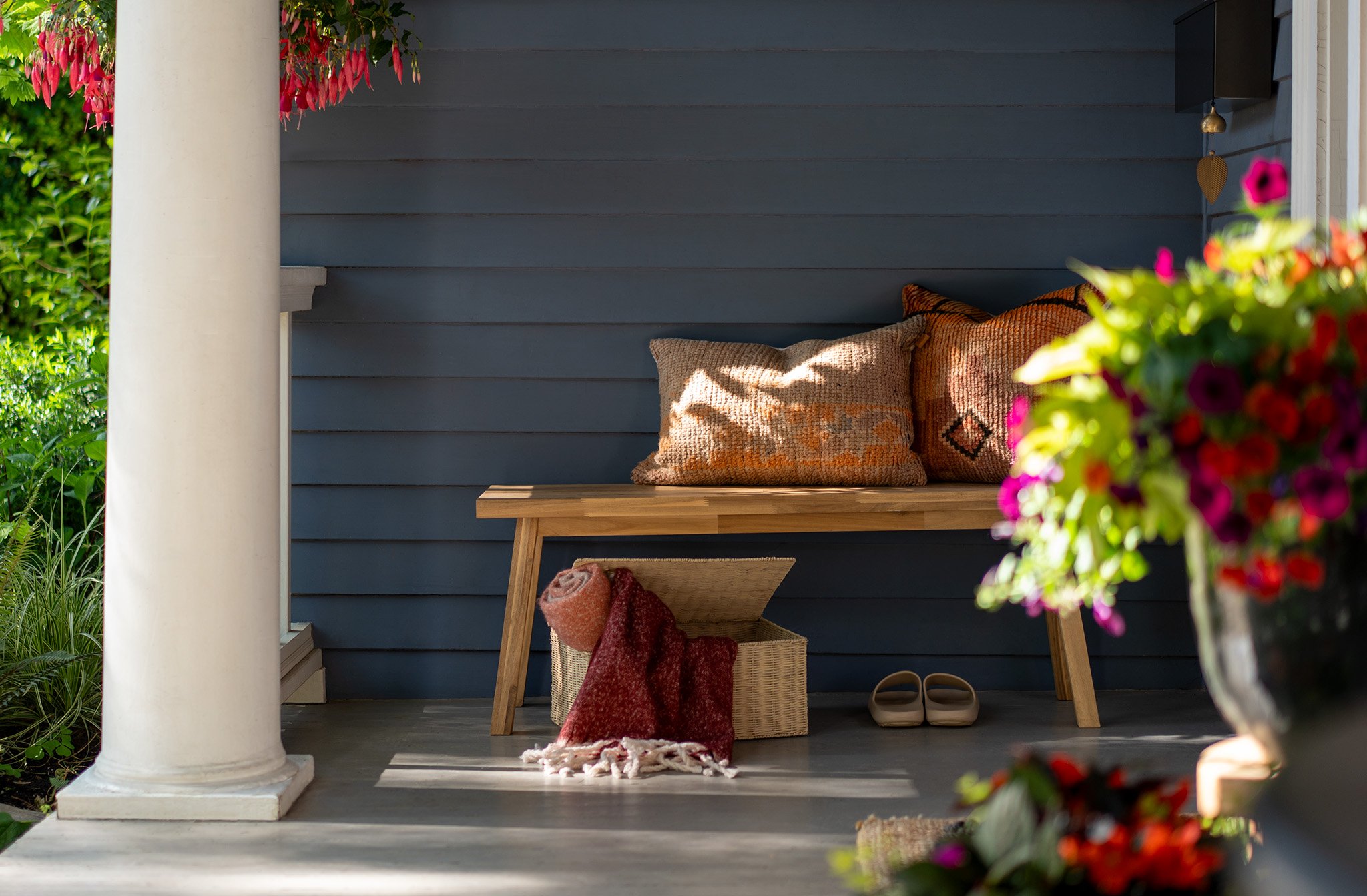
The other thing that pulls a space together is repeating textures and patterns at different heights. On my porch I used rattan throughout: a woven doormat at ground level, wicker baskets mid-level, and a rattan tray on the side table.
On that same tray I have a large hurricane candle and a small floral votive, and that same floral motif is etched into the tabletop itself. None of it is matchy-matchy, but the texture and pattern carry through the whole space and make it feel cohesive without being overdone.
Don't Forget the Functional Details
A few more tips for making a porch feel both personal and functional. A lidded basket near the door is one of my favorites because it keeps everything you need outside close at hand without cluttering the space. Throw blankets, dog supplies, gardening gloves, whatever your porch life actually requires.
And don't underestimate ambiance. A tray on the side table with a few LED candles and a vase with fresh cuttings from your garden makes the whole space feel like a true extension of your indoor home. In the Pacific Northwest where we take every warm evening we can get, that small effort goes a long way.
Brittany Rediger is the founder of Rediger Design, a full-service interior design studio serving Portland and Seattle.
Questions About This Project
-
The difference between a porch that feels finished and one that feels like an afterthought usually comes down to three things: height variation in your plants and accessories, repeated texture or pattern carried through the space, and a few intentional functional details like a lidded basket or a tray with candles. You do not need expensive furniture — neutral pieces with better cushions and layered plants do most of the work.
-
For a porch with morning sun and afternoon shade, begonias, impatiens, geraniums, calibrachoa, ipomoea, and petunias all perform well and are commonly found in pre-assembled nursery arrangements. Hanging baskets with fuchsia or ferns add height variation with very little effort. Buying pre-assembled arrangements from a nursery rather than assembling your own from individual plants tends to look fuller and more intentional, and often costs less.
-
The key is height variation. Nothing should sit at the same level. Mix taller planters with lower ones, use risers to lift arrangements, and add hanging baskets overhead. Then repeat one texture or material — rattan, terracotta, a floral motif — at different levels throughout the space. That repetition creates cohesion without looking matchy.
-
Yes, cushions are where the investment pays off most visibly on a porch. Stock cushions that come with patio furniture tend to be thin and lose their shape quickly. Swapping them for weather-resistant cushions with more padding makes a noticeable difference in both comfort and appearance. Storing them inside during the off season extends their life significantly.
