Because open spaces still need structure.

What is a zone?
Open floor plans are beautiful in theory. They offer light, flexibility, and flow. But when a space is too open, it can start to feel undefined, unfinished, or even uncomfortable.
The solution is not to fill it with more furniture. It’s to create intentional zones. Here’s how I approach defining a large open space so it feels both cohesive and inviting.

Foundational Pieces
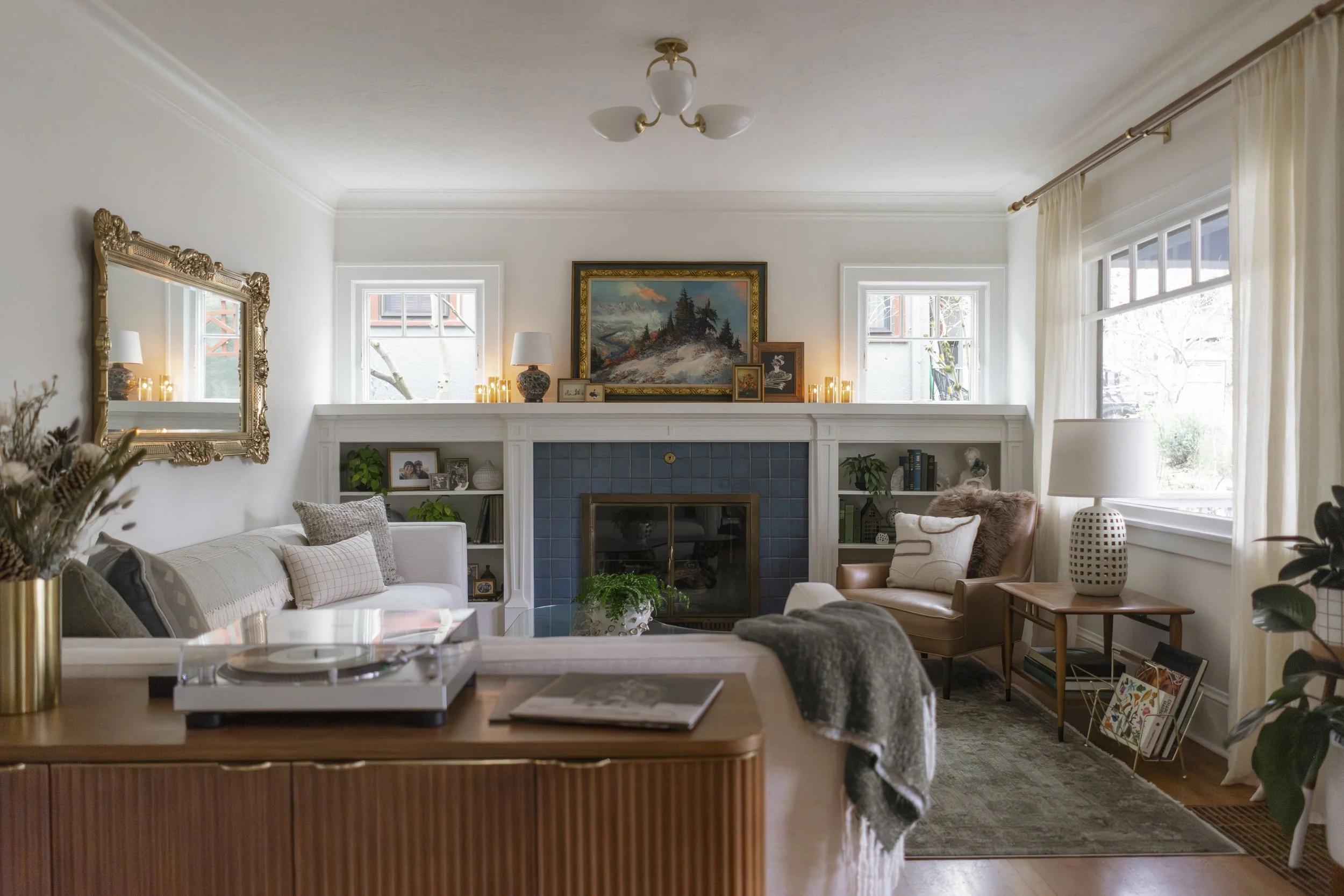
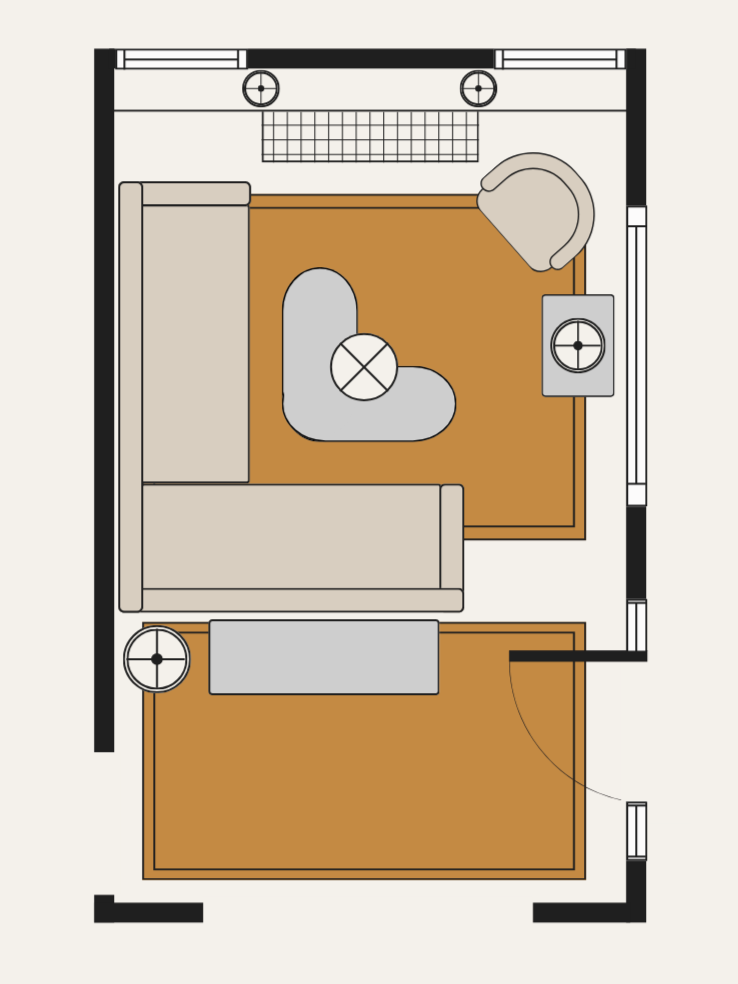
When I’m dividing a large open room, I start by establishing intentional zones using larger foundational pieces like a sofa, sectional, pair of chairs, or even a dining table. The placement of those pieces creates natural circulation paths and defines how the space functions.
Furniture should shape movement. It should quietly suggest where you walk, where you sit, and where you gather.
To further define each zone, choose a generously scaled rug for the primary seating area, and smaller rugs or runners to define secondary zones. For example, you might place a runner in front of a console that leads toward a hallway or adjacent space.
In a main seating zone, make sure the front legs of each piece sit roughly 12 inches onto the rug. It’s okay if the backs of those anchor pieces hang off. That actually helps create connection with surrounding zones rather than isolating the seating area on what I call a “rug island.”
Lighting
Lighting is one of the most overlooked tools when defining a space.
When I’m defining a zone with lighting, I think about it vertically. Your ceiling fixture acts as the apex. It centers and anchors the zone from above, just as the rug grounds it from below. From that point, the lighting should taper outward and downward, expanding into floor lamps and table lamps placed around the perimeter of the zone.
That layered approach creates a light canopy. Instead of relying on one overhead fixture, you’re building volume. The ceiling light defines the center, table and floor lamps create ambient glow around the edges, and sconces can act as subtle boundary markers that visually frame the space.
When lighting is layered this way, it gently contains the zone without closing it off. It defines the space while still allowing light and sightlines to move freely through the room.
Structural Adjustments
Sometimes furniture, rugs, and lighting aren’t quite enough.
Small architectural tweaks can make a meaningful difference in large open layouts. Consider adding short return walls, even if they simply create a natural stopping point for wallpaper or a paint color you’re using to define a zone.
A subtle wall extension gives the eye a place to rest and reinforces the boundary of a seating or dining area without fully closing it off. The goal isn’t to add walls everywhere, but to introduce just enough architecture to support how the space functions.
Finishing Touches
Once you’ve established distinct zones, cohesion becomes the priority.
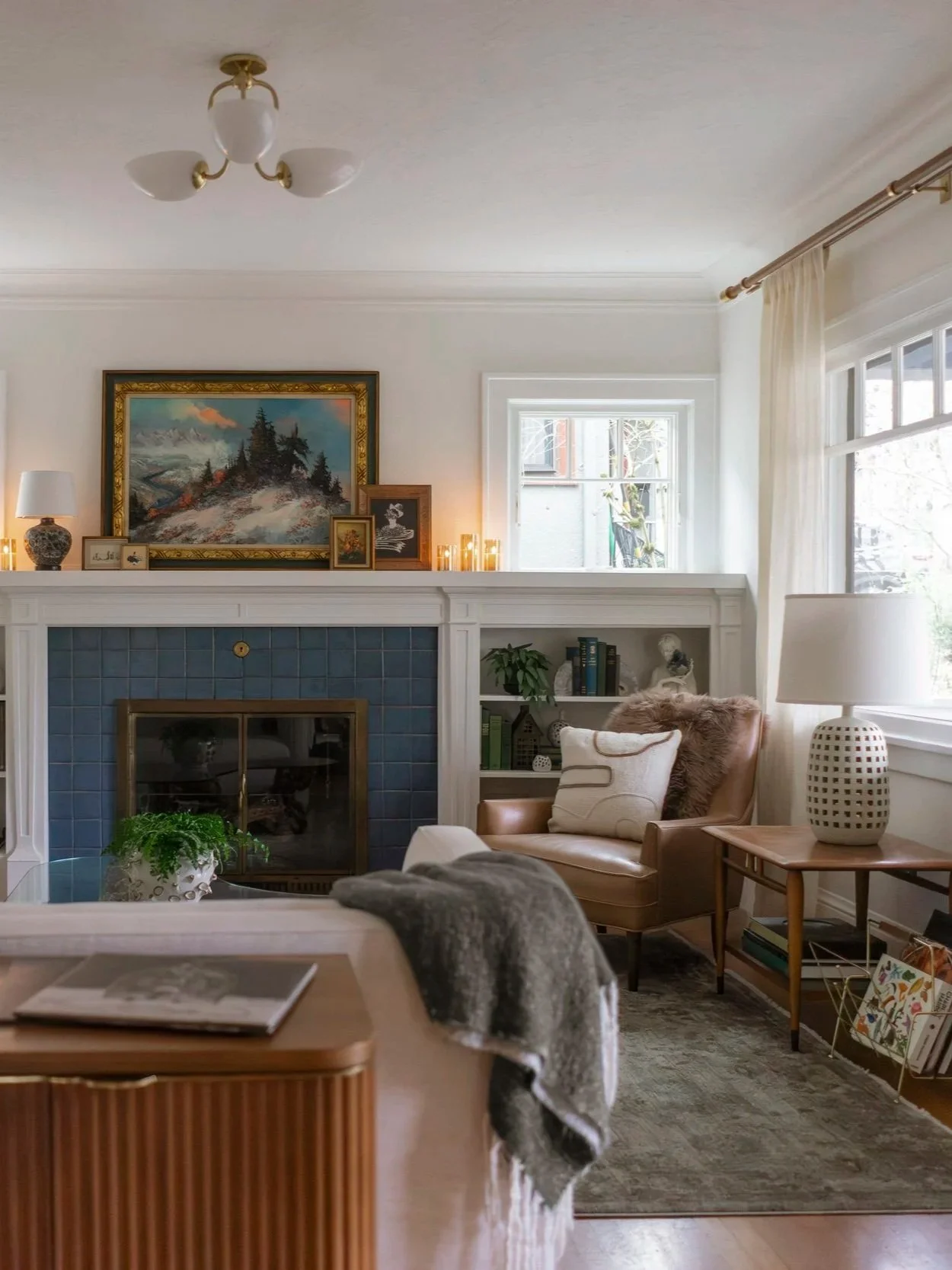
To keep a large open space from feeling chopped up, repetition is key. I repeat materials, finishes, or tones across zones so the room still reads as one unified environment.
If you’re unsure where to start, lean on the rule of three. Choose one element, whether it’s the walnut wood of a coffee table, the brass in your lighting, or the color of your throw pillows, and repeat it in at least three places across different zones.
The key is varying how it appears. Brass might show up in lighting in one area, artwork frames in another, and furniture hardware in a third. That repetition creates rhythm and visual continuity, so even though the room is divided into zones, it still feels intentional and connected.
The Bigger Picture
Zoning an open space is not about breaking it apart. It’s about making a large room feel human in scale.
When each area has purpose, grounding, and thoughtful repetition, the entire space becomes more usable, more inviting, and ultimately more comfortable to live in.
Questions About Topic
-
Open floor plans feel awkward when the space lacks definition. Without zones, the eye has nowhere to land and the room feels like one large undefined area rather than a home. The fix is not more furniture — it is intentional placement of what you already have, using rugs, lighting, and foundational pieces to carve out distinct areas that each have a clear purpose and boundary.
-
Choose a generously scaled rug for the primary seating area and smaller rugs or runners for secondary zones. In the main seating area, the front legs of each furniture piece should sit roughly 12 inches onto the rug. It is fine if the backs hang off — that actually connects the seating zone to the surrounding space rather than isolating it on what reads as a rug island.
-
Think about lighting vertically. The ceiling fixture anchors the zone from above, just as the rug grounds it from below. From there, lighting should taper outward and downward into floor lamps and table lamps around the perimeter. That layered canopy of light defines the center of the zone, creates ambient glow at the edges, and gently contains the space without closing it off.
-
Repetition. Choose one material, finish, or tone — the walnut of a coffee table, a brass finish, a specific color — and repeat it in at least three places across different zones. The key is varying how it appears: brass in a light fixture in one area, in artwork frames in another, in furniture hardware in a third. That rhythm creates visual continuity so the room reads as one unified space even though it is divided into zones.
