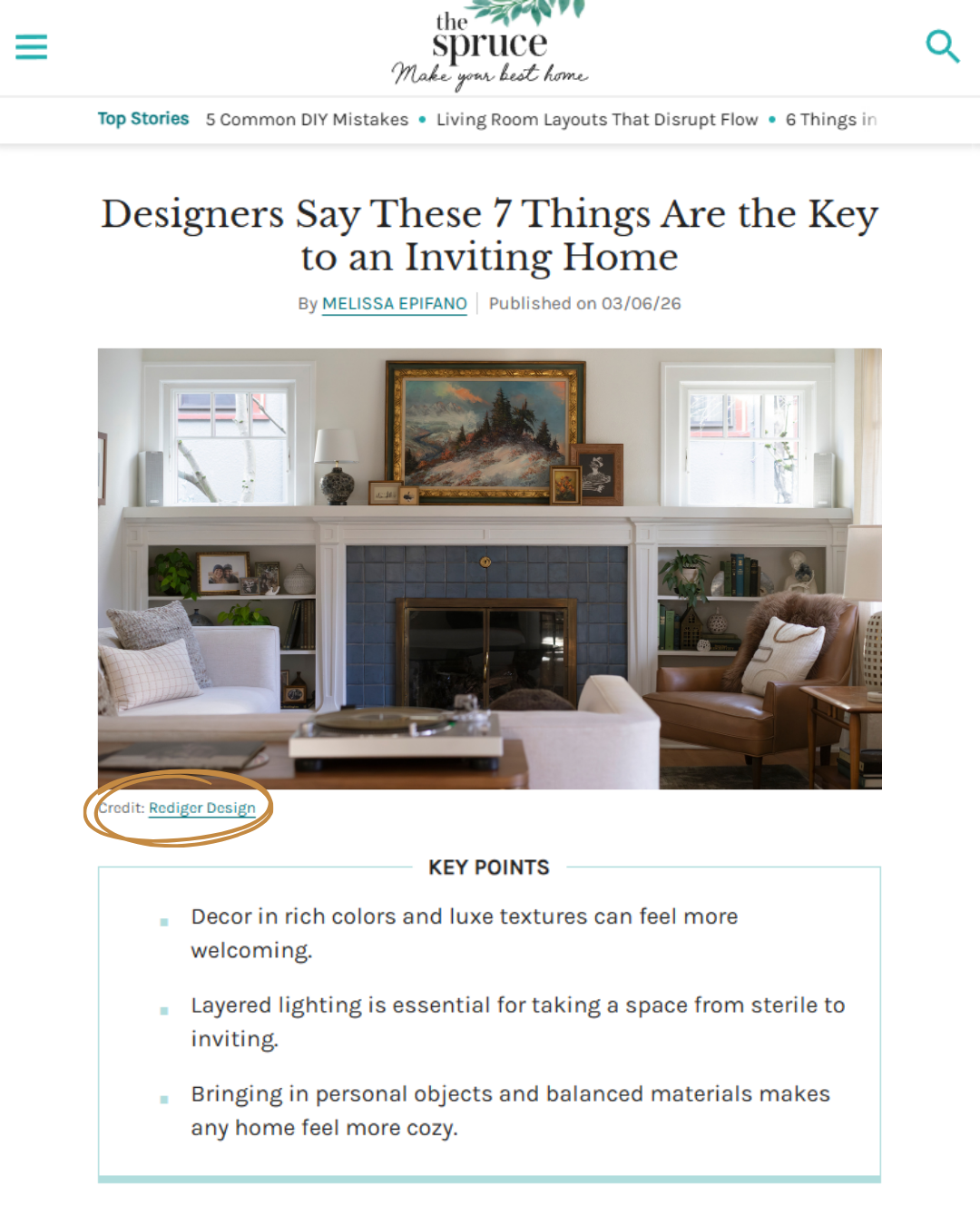
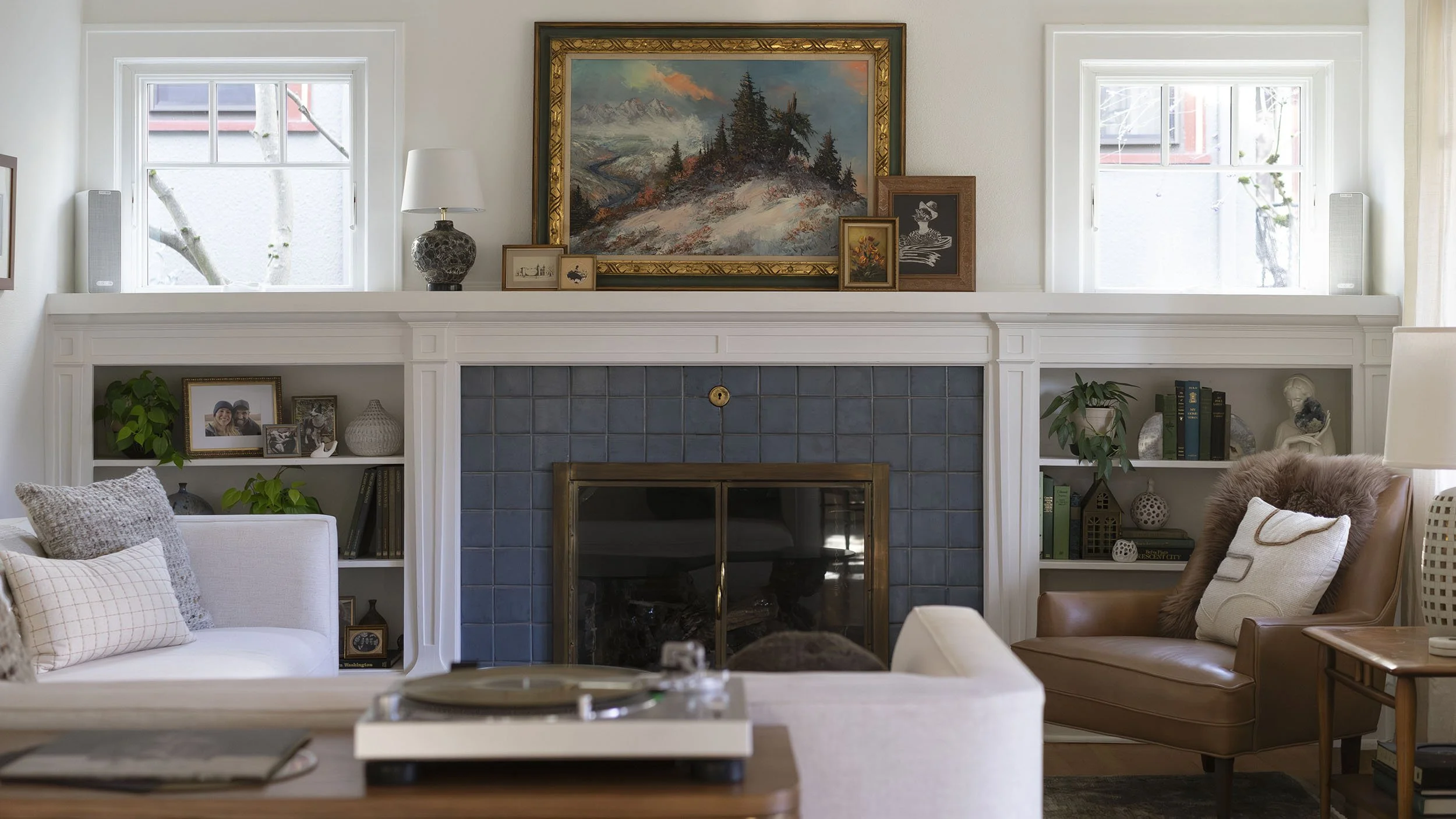
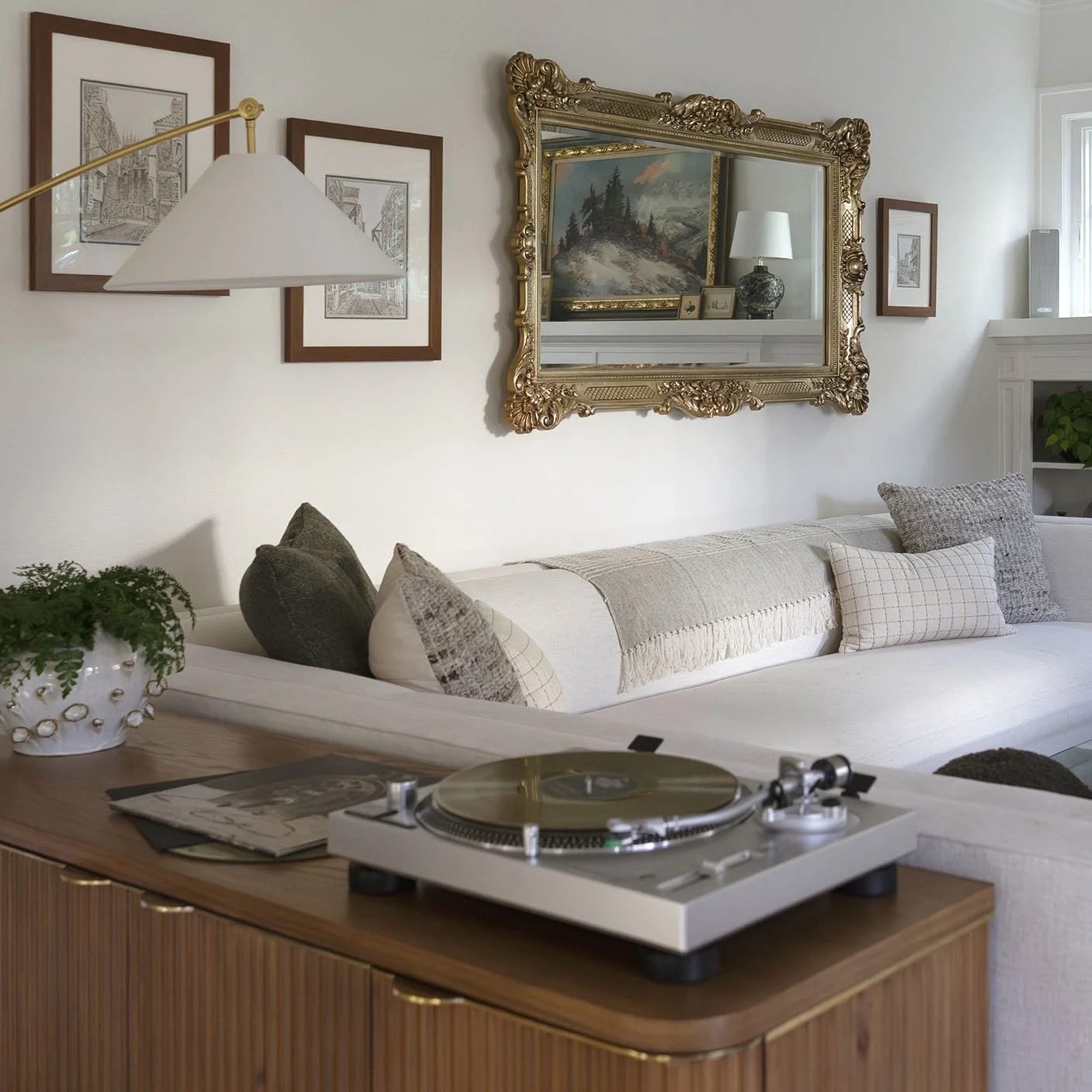
Rooms can quickly feel flat when certain anchoring visual elements are missing, according to interior designer Brittany Rediger.
"Introduce a few 'heavy' visual anchors, like a dark wood console, a vintage mirror, or dark velvet pillows. This creates the highlights and lowlights necessary for a space to feel layered," she says.
Sometimes homes can feel a little off-kilter because of one design element being overbearing or another lacking. Finding a clean balance of what Rediger calls "cold" and "warm" surfaces.
Glass, metals, and stone fall under the former, whereas tactile, soft surfaces and materials often register as warm.
"Cold surfaces are not inherently bad, but they need contrast to add warmth," she says. "Pair a hard surface with a tactile one to bring in that warmth and contrast."
She suggests a high-texture wool rug, textured linens, layered throws, or woven pillows if you have hard, cold surfaces, like a glass coffee table.
…
The kind of bulbs you choose also matters. Rediger points out that warm feelings a room exudes often come from quality lighting.
"Opting for 2700K bulbs adds a natural glow, and keeping your light sources at eye level using lamps and sconces instead of overheads introduces shadow and depth—the two things that cure flat, clinical lighting," she says.
…
Inviting, cozy spaces are often equated with clutter, says Rediger. But this doesn't have to be true. A welcoming home can feel clean and breezy if you know how to use negative space correctly.
"The secret here is intentional breathing room that allows the eye to rest," says Rediger. "Leave 'quiet zones' on your shelves and walls, which creates a sense of calm and feels curated rather than chaotic."