The Secret to Every Great Room: How to Find Your Anchor Piece
We've all been there: standing in an empty room thinking, Where do I even start? I've been there too, even as a designer. Sometimes the excitement makes you want to do everything all at once. But here’s the thing: that’s exactly where most people get stuck and completely overwhelmed. You can't make every decision all at once. You have to go step by step. And the very first step? Find your anchor piece.
Now, here’s where it gets interesting. There are different schools of thought on what an anchor piece is. Some designers swear by one big, timeless piece of furniture. Others say you can anchor a room with a few smaller elements that work together. And you know what? They’re both right.
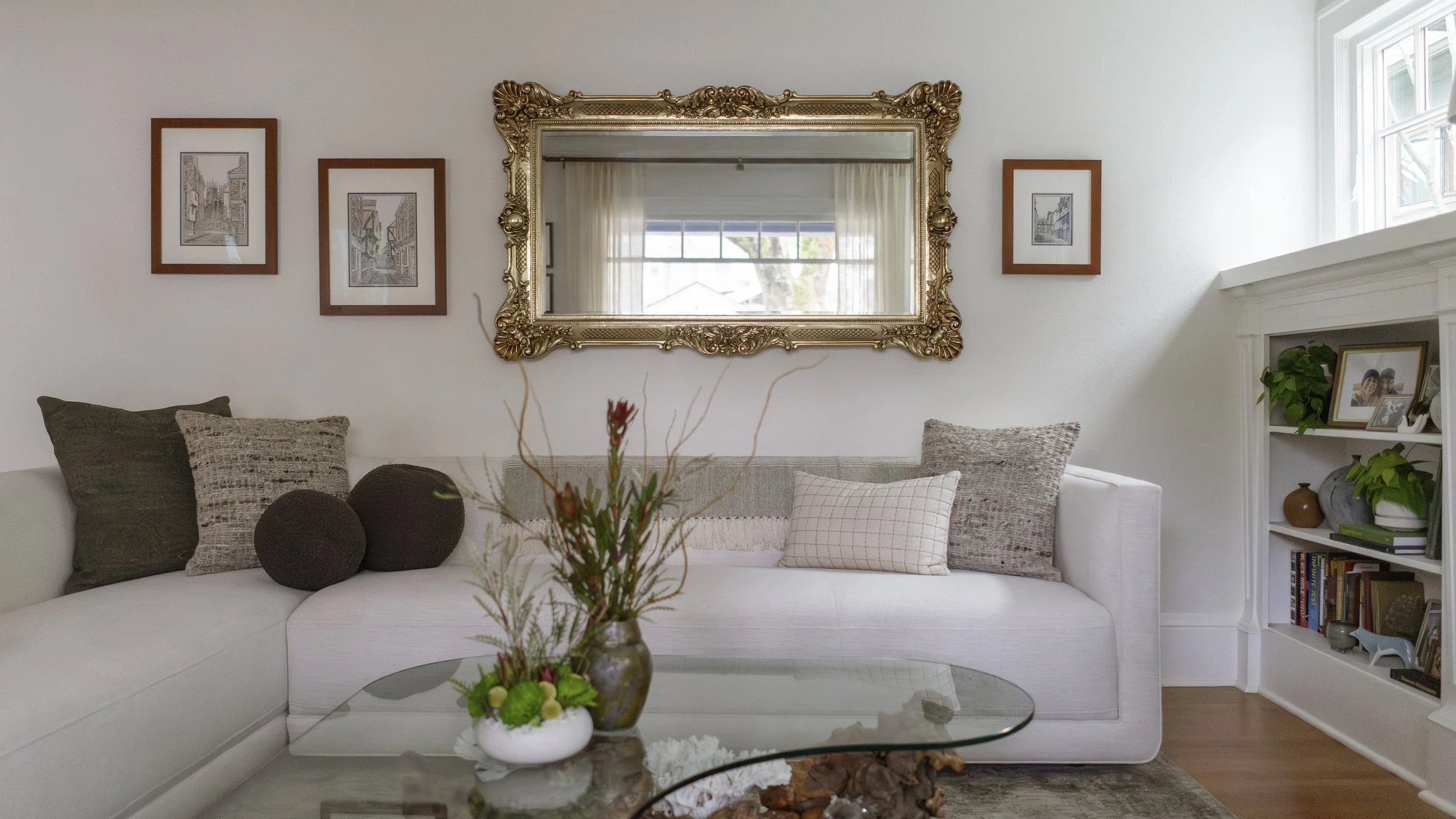
What is an anchor piece?
In design, your anchor piece is the thing that holds the whole room together — the visual boss. An anchor piece either defines the palette, the style, or the function of a room. It’s what gives the space stability and direction so everything else doesn’t feel random.
For me, it’s all about flexibility. Your anchor might be a rug that defines the footprint, a piece of art or mirror that sets the style, or even a color that just feels like you. That one choice becomes your North Star — guiding every decision after it and keeping the whole room feeling intentional.
So how do you put this into practice? Here are five anchor options to get you started.
#1 Ground the Room with a Rug
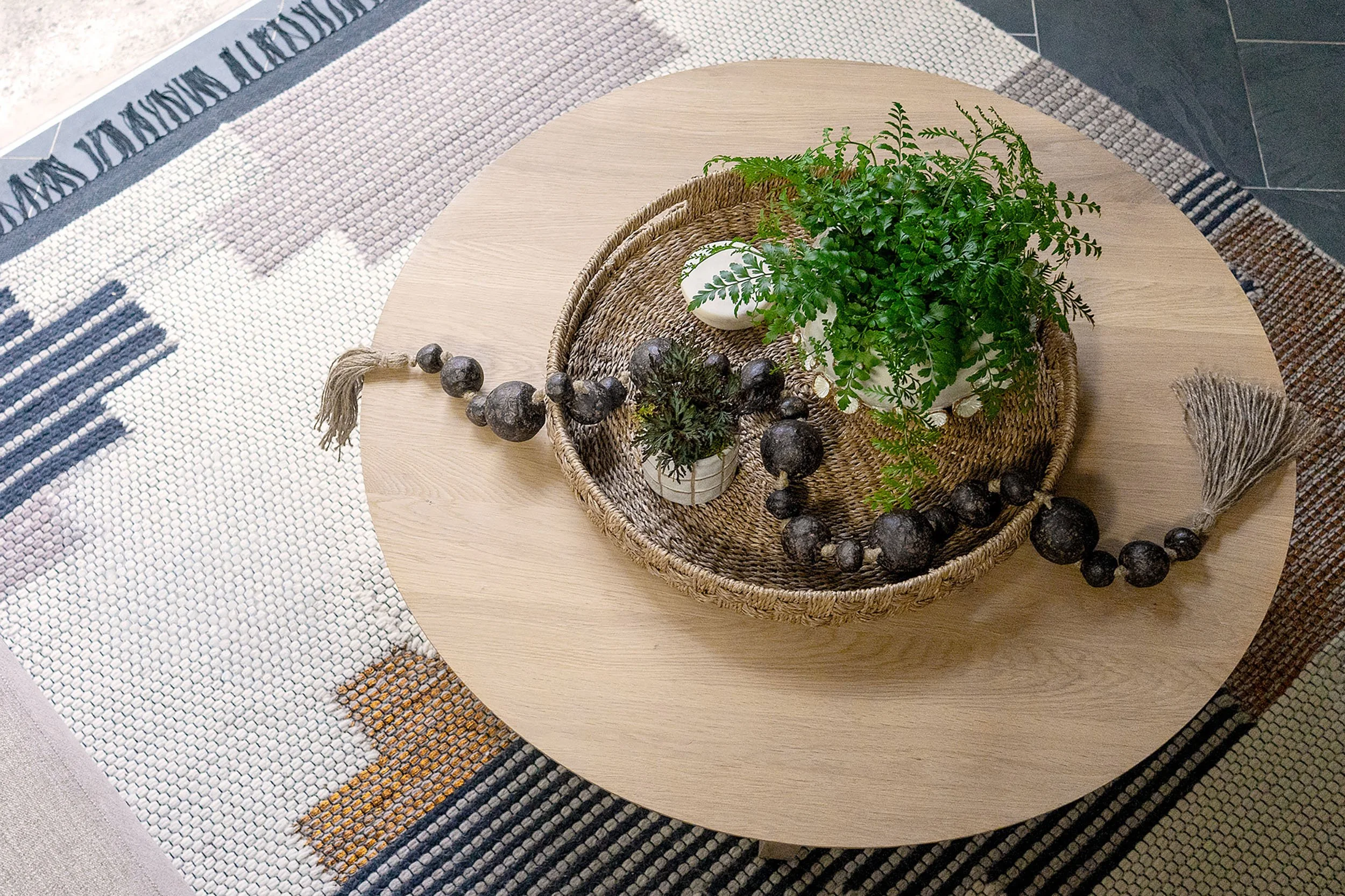
A rug does more than just soften your step — it defines the footprint of a room and signals how the space should be used. Rugs are especially powerful in open-concept layouts where you need to carve out a dining nook, a conversation area, or a cozy lounge.
In my own home, the front door opens directly into the living and dining areas. There’s no walled-off entryway, so it could easily feel like undefined “dead space.” To create a sense of arrival, I grounded the area with a rug. It’s quite literal in that way — the rug anchors the spot as the entry, with a console table layered on top and my sectional just beyond it. Suddenly, what could have been an in-between zone now feels like its own intentional space.
Designer Tip
Use a rug to define zones in open layouts — an entry, a dining area, or a seating group. Even without walls, a rug gives each space a clear boundary.
#2 Lead with Art or a Statement Piece
Sometimes your anchor isn’t underfoot — it’s front and center. A piece of art, a sculptural object, or a mirror can instantly set the style for a room and draw everything else into harmony.
In my own living room, the fireplace is the natural focal point. Above it hangs a large vintage mirror I inherited from my grandmother. It’s more than just decoration — it grounds the entire space and establishes the style direction (and bounces some much-needed light back into the room!). The warm brass tones and intricate detailing of the frame inspired other choices, like the shape of the light fixture and the vintage artwork I’ve collected over the years.
But just because I have a big vintage mirror doesn’t mean I want to live in a time capsule. My sofa, for example, is very much of this era, and it balances the room so it doesn’t feel like I stepped back in time. I’ve echoed the mirror’s vintage character through smaller details — a vessel here, a side table there — without letting it dictate every choice. That mix is what makes the space feel layered, collected, and lived in.
Designer Tip
Let your anchor piece guide you, not box you in. Echo its tones or details in smaller ways, but balance it with pieces from this era so the room feels layered, not themed.
#3 Start with a Color You Love
Sometimes your anchor isn’t a single object at all — it’s a color. A great way to discover yours is by looking in your own wardrobe. What shades do you feel most confident wearing? Chances are, you’ll also feel comfortable living with them in your home.
But inspiration doesn’t have to stop there. Nature is one of the best color palettes we have. Think about the hues that make you pause — the green of moss on a hike, the soft blue of the coast, or the warm pinks and oranges of a desert sunset.
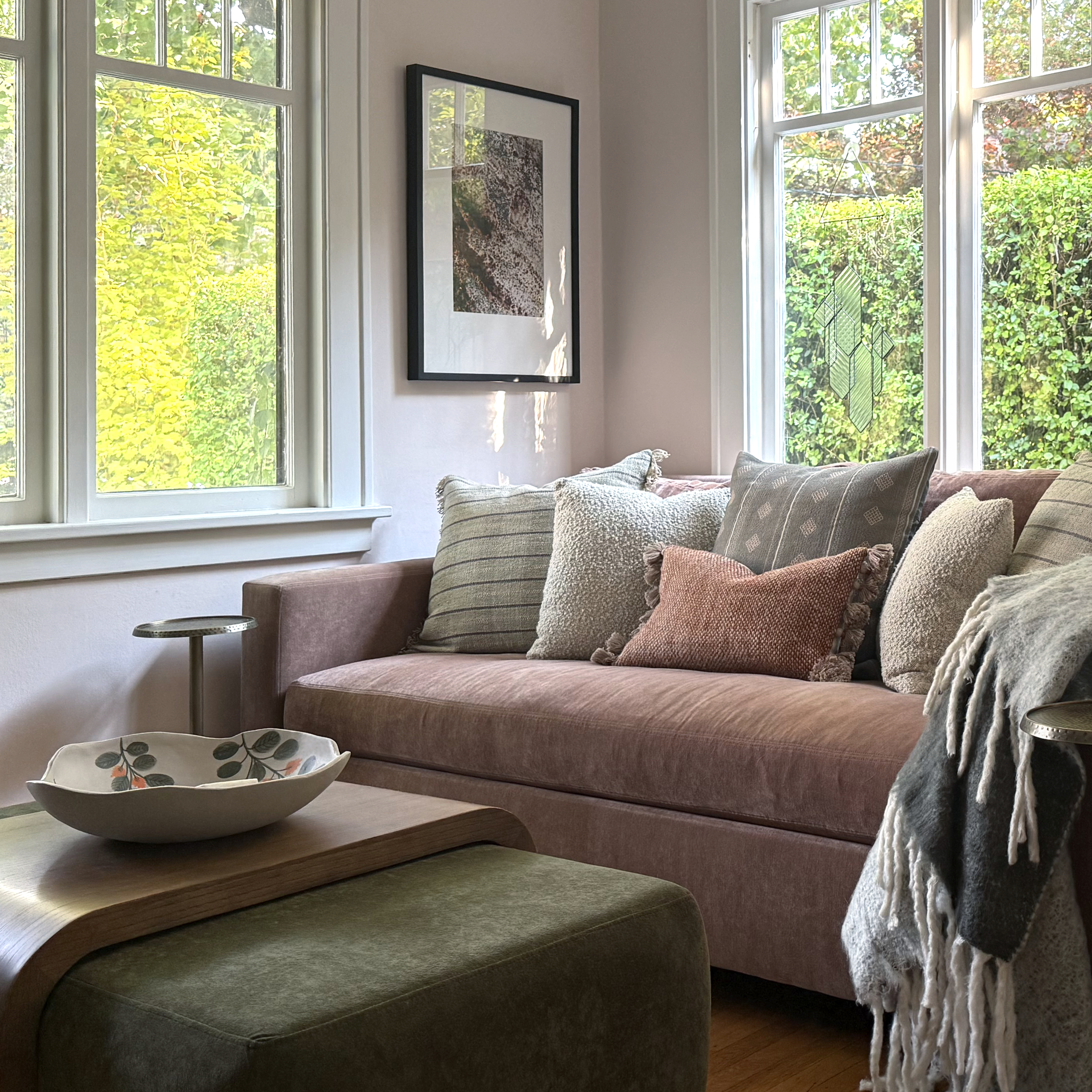
For example, in my own TV lounge, I pulled directly from that desert inspiration. The walls are painted Early Sunset by Benjamin Moore, a dusty pink that reminded me of the desert sky at sunset. The couch echoes that same tone, while the surrounding earth-toned woods and textiles layer in warmth and balance. The result is a space that feels calm, cohesive, and rooted in something bigger than a paint swatch — it’s tied to a memory and a feeling.
Designer Tip
Build a palette around your anchor color by pairing it with one grounding neutral and one contrasting accent. This keeps the scheme balanced but not boring.
#4 Layer In Textiles for Character
Not every anchor piece has to be dramatic or expensive. It doesn’t have to be a vintage heirloom mirror, a statement painting, or a high-end wool rug. Sometimes the anchor is as simple as a grouping of textiles that pulls the room together. Throws, pillows, or even bedding can set the mood and give a space personality — without the commitment or price tag of bigger pieces.
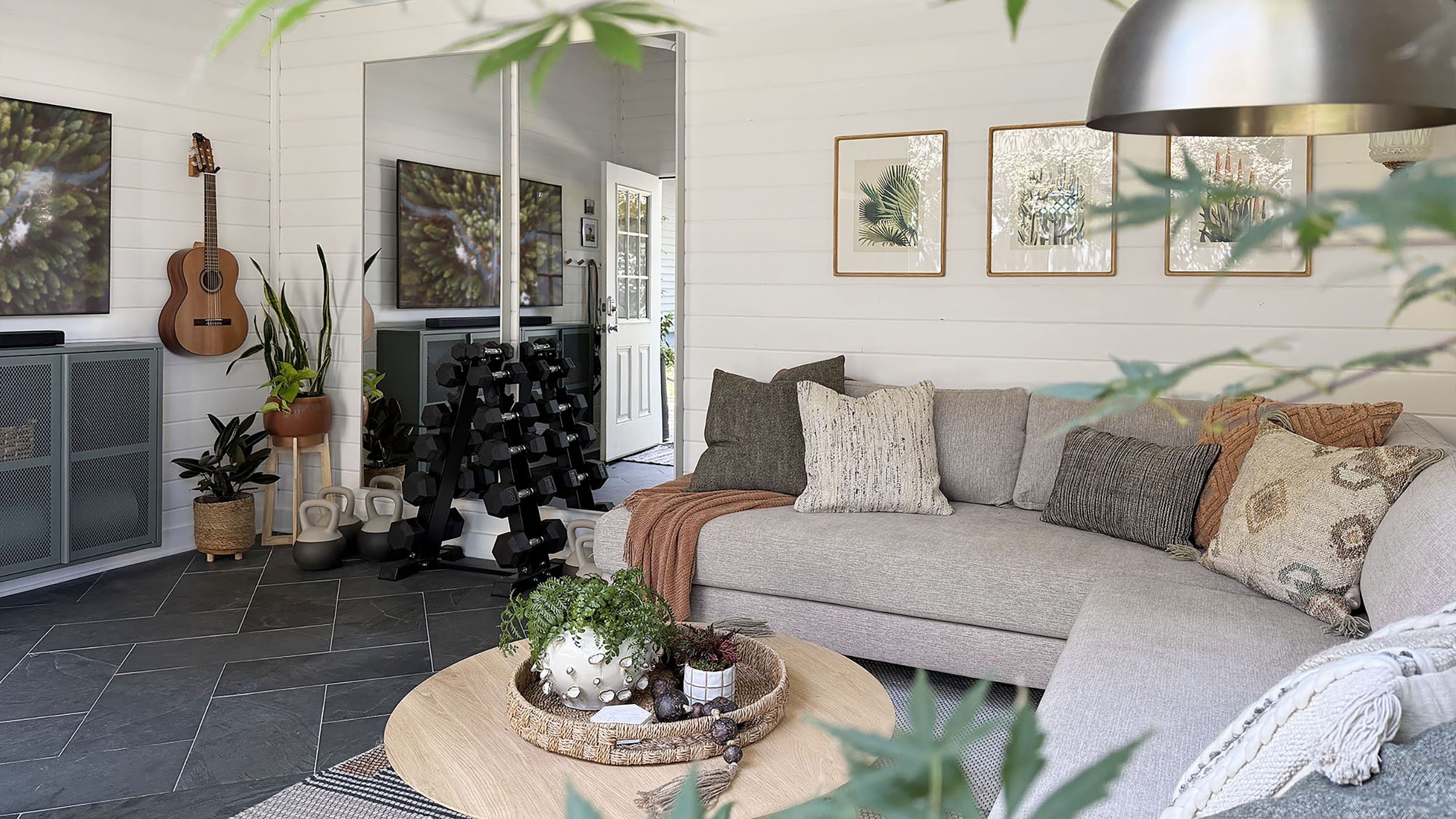
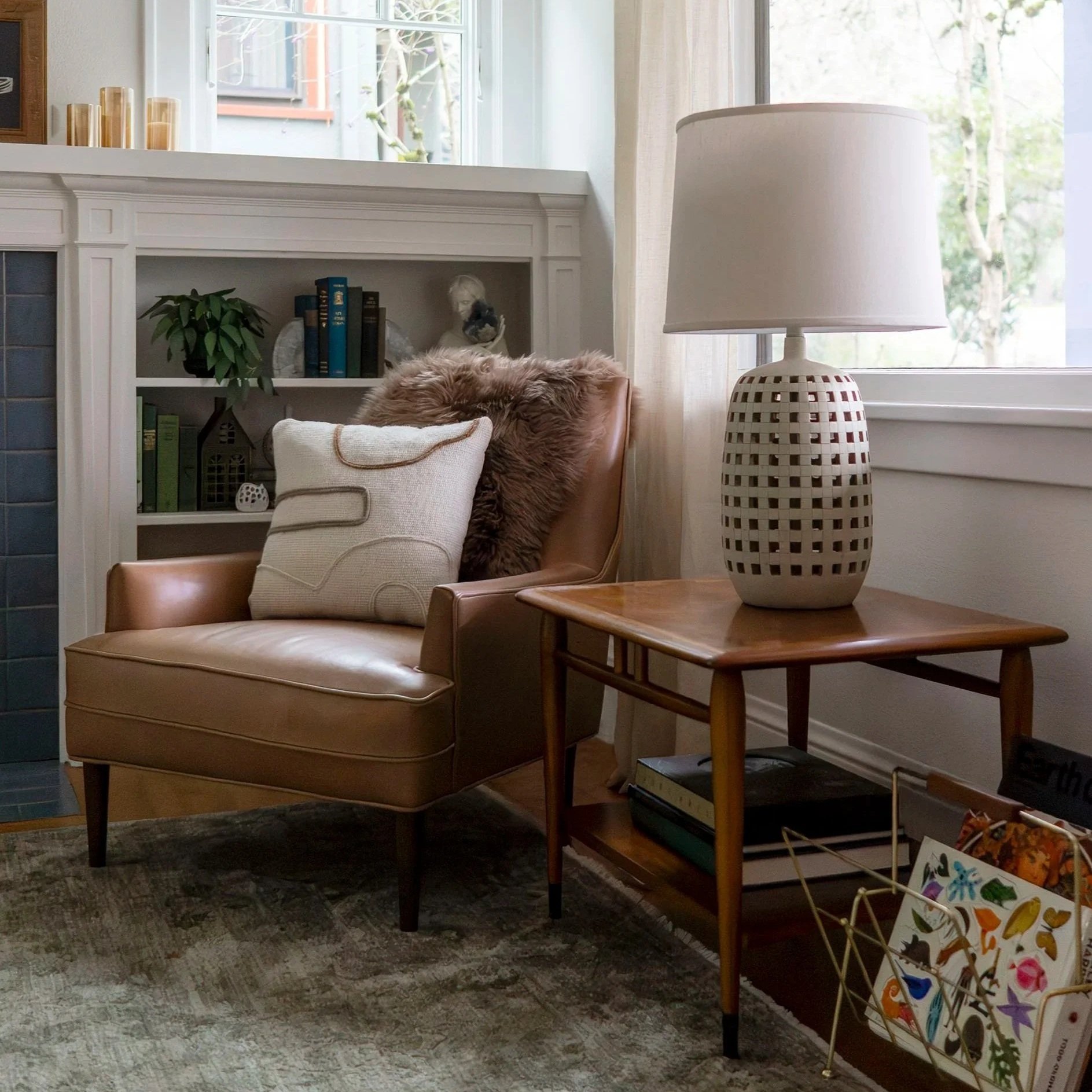
Take my garage lounge as an example. It’s an indoor-outdoor hangout where friends, kids, and dogs all pile in — so it can’t be too precious. The sectional is neutral and the rug is the workhorse that grounds the zone, but the pillows are what bring the character. A mix of earth tones, blues, and textures helps the room feel anchored and intentional, even though it’s a space meant for real life.
Designer Tip
When anchoring with textiles, repeat one color or texture at least three times in the room — in pillows, curtains, or a throw. It creates cohesion without looking too matchy-matchy.
#5 Make Lighting the Star
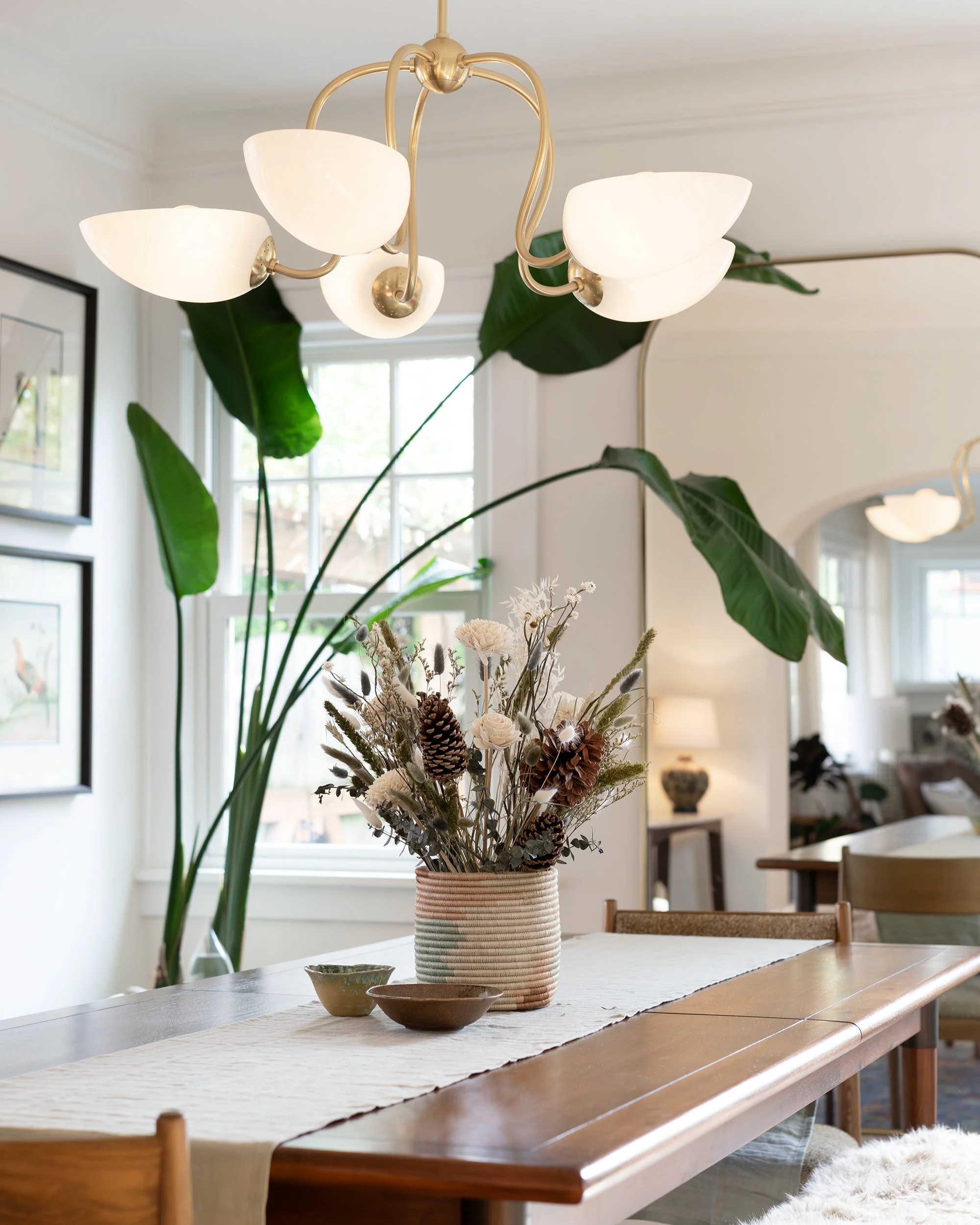
In a dining room, the chandelier often takes the lead as the anchor piece. It’s the element that draws your eye the moment you walk in and sets the tone for everything else.
In my own dining room, the chandelier’s sculptural brass form is the star. Its curves and warm tones establish the style direction, while the table, chairs, and rug play supporting roles. The light fixture also ties into other elements in the home — its curvature echoes both the arched entry into the dining room and the arched mirror within the space. That repetition creates a subtle thread of cohesion without tipping into matchy-matchy.
Designer Tip
Let your dining room light fixture be the star. Choose a scale that feels slightly larger than you think you need, and echo its finish or shape in subtle ways — like a lamp base or a frame — to tie the whole space together.
Wrapping It All Together
When you start with one anchor, the whole room stops feeling like a puzzle dumped on the floor. Decisions click. The space starts telling a story. And suddenly it feels like you.
So before you fill your cart with half a dozen “maybes,” pick your anchor. That one choice will keep you steady when the design overwhelm creeps in — and it’s exactly where every great room begins.
Questions About This Project
-
An anchor piece is the element that holds a room together and gives it direction. It defines the palette, the style, or the function of the space so that every other decision has something to respond to. It could be a rug, a piece of art, a light fixture, a color, or even a grouping of textiles. The point is that it becomes your starting point — the thing everything else is chosen in relationship to.
-
A rug defines the footprint of a space and signals how it should be used. In open-concept layouts it carves out distinct zones — a dining area, a seating group, an entry — without walls. The rug tells the eye where one space ends and another begins. Sizing matters: a rug that is too small floats in the middle of the room and loses its anchoring effect.
-
Yes, especially in a dining room where the chandelier or pendant is the first thing you see when you walk in. A statement light fixture sets the style tone and scale for everything else — the table, the chairs, the rug all play supporting roles around it. Choosing a fixture that feels slightly larger than expected tends to read as intentional rather than undersized, and echoing its finish or shape in smaller details ties the room together without feeling matchy.
-
The key is balance rather than theme. If your anchor piece is vintage or antique, pair it with at least one piece that is clearly contemporary so the room feels collected rather than costumed. Echo the character of the anchor in smaller details — a similar tone, a repeated shape — without letting it dictate every choice. The goal is a room that feels layered and personal, not like it was frozen in a particular era.
